

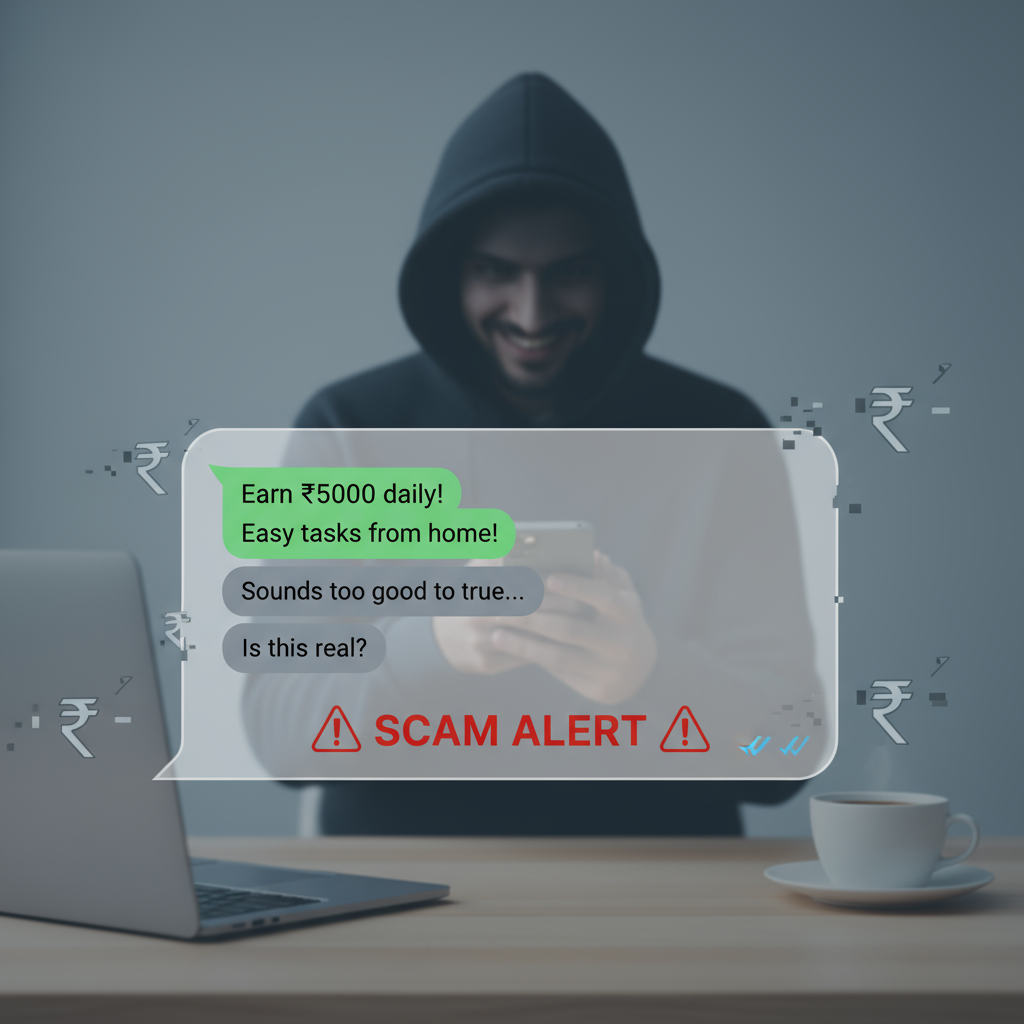
Dont Get Tricked: How Scammers Exploit Work From Home Seekers where I lost ₹15,000
My Story: How I Got Scammed
On 16th April, I received a message on WhatsApp offering a work-from-home job. Excited at the opportunity, I was asked to register with their company and provide my passport photo and signature.
I was given 500 forms to fill out within 5 days. I completed all the forms diligently by the deadline. On 23rd April, I received a call informing me that 66 of my forms were “wrong” and that I needed to pay ₹4,800 for corrections before I could receive my salary. Trusting the company, I paid the money for the so-called corrections.
Later, I realized that this was a scam. The company’s promise of employment and payment was fake, and the “form correction” fee was a method to defraud me. Ultimately I lost ₹15,000.
How the Fraud Happened
- Initial Trust via WhatsApp Message: The scammers used a familiar platform to contact me, making the offer seem personal and legitimate.
- Collecting Personal Details: They requested my passport photo and signature, giving an impression of a formal registration process.
- Creating Pressure: By claiming mistakes in the forms, they created a sense of urgency and guilt, pushing me to pay the correction fee.
- Upfront Payment for Salary: The scam hinged on asking for money before providing the promised salary, which is never standard practice in legitimate jobs.
Warning Signs: When to Exercise Caution
- 🔴 Requests for personal details like photos and signatures upfront.
- 🔴 Requirement to complete tasks or forms under tight deadlines.
- 🔴 Unexpected charges or fees for mistakes, corrections, or processing.
- 🔴 Salary or payment promised only after paying additional fees.
- 🔴 Communication only through WhatsApp or social media with no official company email or contact number.
How to Protect Yourself
- Verify the Company: Always check the company’s official website or LinkedIn page before sharing personal information.
- Do Not Pay Fees for Employment: Legitimate employers do not ask for money for corrections, training, or registration.
- Avoid Hasty Decisions: Scammers often pressure you with tight deadlines. Take your time to confirm legitimacy.
- Check Contact Channels: Ensure that the communication comes from official channels, not just WhatsApp, Telegram, or social media.
- Report Suspicious Activity Immediately: If you suspect fraud, reporting it on the cybercrime.gov.in portal is a must. This is the official platform for cybercrime complaints in India and ensures that your case is properly recorded and directed to the appropriate authorities.
Takeaways
Work-from-home scams prey on eagerness and trust. Always be cautious of unsolicited job offers, especially if they demand personal information or upfront fees. A healthy dose of skepticism can save you from financial loss and stress.